
Strengthening Community-Led Resilience Across Hawaiʻi

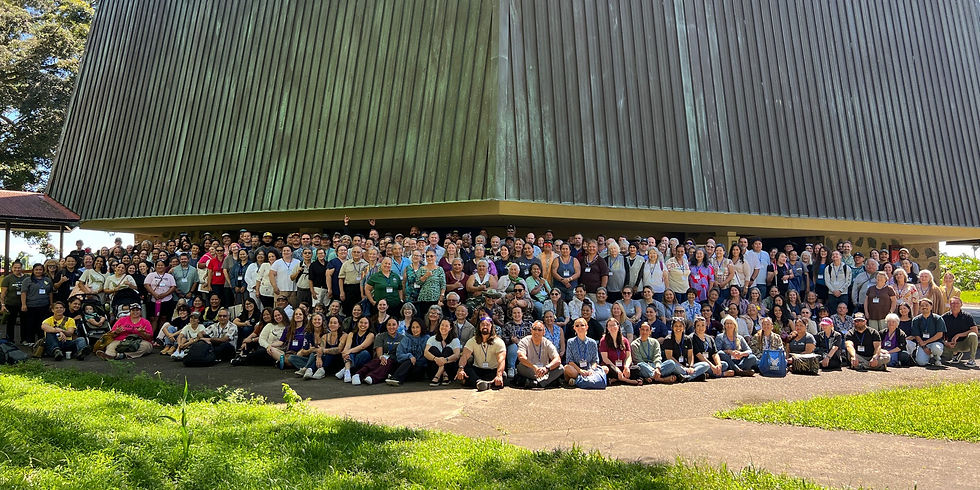
Now in its fourth year, the Resilience Hub Summit has become a cornerstone convening for communities working to strengthen Hawaiʻi’s readiness before, during, and after disasters. This year’s summit brought together community leaders, emergency managers, government partners, and sector experts from across the state to deepen relationships and expand the operational capacity of the Resilience Hub Network—a growing movement rooted in local leadership and shared responsibility.
Held over three days of applied training and planning (May 18–20), the summit convened 20+ Hawaiʻi Island Resilience Hubs—including teams from Kaʻū, Puna, Kona, Kohala, Hilo, and Waimea—alongside 7 Koʻolau (Oʻahu) Resilience Hubs, reinforcing statewide peer learning and alignment. Participants engaged in hands-on sessions focused on coordination, communication, and real-world response operations, including Emergency Operations Center (EOC) coordination, situational reporting, damage assessment, radio communications, volunteer and donation management, shelter operations, and hub activation planning for the 2025 hurricane season. The structure of the summit created space for hubs to learn directly from emergency managers while also learning from one another—strengthening both systems alignment and peer-to-peer trust.
As Amos Lonokailua Hewitt of the Maui Emergency Management Agency reflected, “What I witnessed at this summit is how resilience is truly built—through community, shared learning, aloha, and a deep sense of kuleana and responsibility to one another.” His participation, alongside emergency management leaders from Hawaiʻi Island, Kauaʻi, Oʻahu, and HIEMA, grounded the summit in lived experience and reinforced the essential role communities play during large-scale disasters.
The summit also featured training and coordination support from government and response agencies and system partners, including the Mayor’s Office (County of Hawaiʻi), Hawaiʻi County Parks & Recreation (shelters), the National Weather Service, the American Red Cross, the Hawaiʻi Police Department, the Fentanyl Task Force, and the Center for Collaborative Heat Monitoring. Together, these sessions reflected an integrated approach to resilience—recognizing disasters as social, environmental, and infrastructural events, not just emergencies.
A powerful moment of the summit was the sharing of freeze-dried lūʻau stew, preserved for up to 25 years and offered as both sustenance and storytelling. Created by Keala Kahuanui and Aunty Tammy Mahealani Smith, the meal represented the culminating project of a food preservation course completed by nine Hawaiʻi Island community groups. This work strengthens food security, supports circular local economies, and enhances long-term preparedness—demonstrating how cultural practice and disaster readiness can move hand in hand.
Each year, more individuals step into leadership roles across the Resilience Hub Network, increasing its reach and effectiveness. The Resilience Hub Summit continues to serve as a critical moment for reflection, skill-building, and forward planning—ensuring that Hawaiʻi’s communities remain connected, capable, and supported as they navigate an evolving landscape of risk and opportunity. For more information on the Resilience Hub network, email us at contact@vibranthawaii.org or visit www.vibranthawaii.org/hubs.
Comments